Actually, I'm Team Villain: The Cultural Moment That Made Us Fall for the Bad Guy
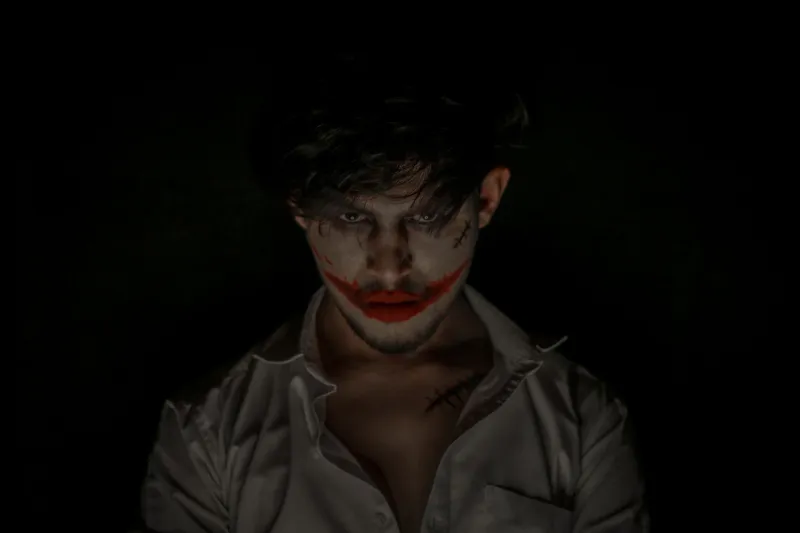
Let's be honest. The last time you watched a prestige drama, a superhero spinoff, or even a glossy streaming limited series, there's a decent chance you weren't fully on the hero's side. Maybe you caught yourself hoping the antagonist would get away with it — just this once. Maybe you were scribbling fan theories about their backstory instead of celebrating the protagonist's win. Maybe, at some point, you looked at the person the show told you to hate and thought: honestly, I get it.
Welcome to the villain era. And no, you're not a bad person for being here.
The Hero Has a Branding Problem
Traditional heroes are exhausting in a very specific way. They're noble. They sacrifice. They make the right call even when it costs them everything. And somewhere along the way, audiences — particularly in the streaming age — started finding that arc a little... thin.
It's not that we've lost the capacity for hope or goodness. It's that we've become sharper viewers. We've consumed enough content to recognize when a character is being handed moral clarity on a silver platter. And that recognition breeds skepticism. Real people don't move through the world with clean motivations and justified victories. Real people are compromised. They carry wounds. They make choices that make sense to them even when those choices wreck everything around them.
Villains, written well, do all of that. They show their math. And we respect the math even when we hate the answer.
The Streaming Effect: More Time, More Texture
This shift didn't happen in a vacuum. The rise of long-form serialized storytelling — the kind that streaming platforms built their empires on — fundamentally changed what a character could be. When you have ten episodes instead of two hours, you can afford to give a villain a childhood. A loss. A logic.
Think about how Breaking Bad turned Walter White's descent into the most-discussed character study in recent TV history. Or how Succession's Logan Roy became a figure of dark fascination despite — or maybe because of — the wreckage he left behind. Or how Wicked, both on stage and screen, reframed an entire classic story by asking: what if the witch had a point?
These aren't accidents. They're the result of writers, showrunners, and studios recognizing that audiences have evolved. The old binary of hero versus villain doesn't hold when viewers have spent years dissecting character motivation in online forums at midnight.
Rooting for the Antagonist Is a Form of Criticism
Here's where it gets genuinely interesting: villain fandom isn't just an emotional reaction. It's often a critique.
When viewers root for a morally grey character over the anointed hero, they're frequently pushing back against the story's framing. They're saying: the system this hero is protecting doesn't deserve protecting. Or: the person this story wants me to pity isn't actually the most sympathetic person in the room.
That's a sophisticated reading. And it's one that communities — online fandoms, Reddit threads, Discord servers, group chats — have been doing collectively for years. The conversation around a villain's arc becomes a space where people work out bigger ideas: about justice, about power, about whose pain gets taken seriously in storytelling and whose gets flattened into backstory.
That's culture happening in real time. That's what makes it worth paying attention to.
Morally Grey Is the New Relatable
There's also something deeply personal happening when we connect with a villain. Because most of us, if we're being straight with ourselves, have never been the uncomplicated hero of our own story. We've been petty. We've held grudges we probably should've let go. We've made decisions that protected us at the expense of someone else.
Villains give us permission to examine those parts of ourselves without judgment — at a safe narrative distance. When Killmonger in Black Panther lays out his worldview in a way that makes the audience genuinely uncomfortable with how much sense it makes, that's not a writing mistake. That's the story doing its most important work. It's holding up a mirror and asking: where does your sympathy actually live?
Morally grey characters are relatable in a way that pure heroes can't be. They're flawed in recognizable directions. And in a media landscape that keeps promising "authentic" content, nothing reads more authentic than a character who wants something badly enough to do something wrong to get it.
The Community That Forms Around the Bad Guy
One underrated part of this whole phenomenon is what it does for the people who experience it together. Villain fandoms are genuinely some of the most engaged, analytically sharp communities in online entertainment culture.
They write the deep-cut essays. They build the alternate timelines. They argue passionately about whether a character's choices were inevitable given their circumstances — which is, when you strip away the fictional layer, a pretty meaningful philosophical debate about free will and accountability.
These communities form real bonds over shared interpretations. You find your people not just by loving the same show, but by reading it the same way. And sometimes that means being the group that claps when everyone else boos.
There's a particular kind of connection that forms when you're rooting for something the mainstream narrative is asking you to reject. It's a little rebellious. It's a little intimate. It says something about who you are and how you think — and that's exactly the kind of signal people use to find their people.
What This Tells Us About the Stories We Actually Need
The villain-sympathy trend is bigger than any single character or franchise. It points to a genuine hunger for storytelling that doesn't hand us our conclusions pre-chewed. Audiences across the US — across every demographic — are signaling that they want complexity. They want to be trusted to hold contradictions. They want the discomfort of rooting for someone they shouldn't, and they want to sit with what that discomfort reveals.
That's not moral confusion. That's moral engagement.
The best antagonists don't make us want to be bad. They make us think harder about what bad even means — who defined it, who benefits from that definition, and whether the story we're being told is actually the whole story.
And honestly? That's more interesting than watching the hero win for the hundredth time.
So yeah. Team Villain. At least until they give us a reason to switch sides — and even then, we're probably going to hesitate.