Still Got Chills: The Surprising Power of Shared Entertainment to Unite a Divided Country
Let's be honest — the United States is not exactly having its most cohesive moment. Political divisions, social media echo chambers, a news cycle that seems designed to exhaust you. It would be easy to look at all of that and conclude that shared culture is basically over, that we've all retreated into our separate corners and that's just how it is now.
Then Beyoncé drops a surprise album and the entire internet collectively loses its mind for 48 hours. Or the US Women's National Soccer Team wins a World Cup match and strangers are hugging in sports bars from Portland, Maine to Portland, Oregon. Or a single clip from a gaming tournament goes so viral that your aunt who has never touched a controller in her life is texting you about it.
Something is still happening. And it might be more important than we realize.
The Algorithm Didn't Kill the Cultural Moment
There's a popular narrative that says fragmentation has made genuine, collective cultural moments impossible. Everyone's watching something different, listening to something different, existing in their own algorithmically curated bubble. And sure, that's partially true. We're not all watching the same three TV channels anymore.
But the data keeps telling a different story. Taylor Swift's Eras Tour didn't just sell out stadiums — it became a genuine economic and social phenomenon that local news covered like a weather event. The Super Bowl halftime show, regardless of who's performing, still generates the kind of water-cooler conversation that TV executives would pay anything to manufacture. And when a gaming moment — like a clutch play at a major esports tournament — gets clipped and shared across platforms, it jumps from gaming Twitter to mainstream news to your office Slack channel in about six hours.
Cultural critic and writer Desiree Fontaine, who studies entertainment and social cohesion, puts it this way: "We haven't lost the capacity for shared experience. We've just changed the venues. The campfire got bigger and moved online, but people still gather around it."
What Makes Something Actually Go Viral
Not every entertainment moment earns that collective energy. Plenty of things get pushed, promoted, and marketed to death without ever achieving genuine cultural resonance. So what's the difference?
The short answer: emotion first, context second, accessibility always.
The moments that break through tend to be ones that hit an emotional nerve that transcends demographic lines. Brandi Carlile's performance at the 2019 Grammys. The finale of a beloved show that divided fan theories for years. A sports upset so improbable it almost feels scripted. These moments work because they tap into something human — surprise, grief, joy, pride — before they tap into any particular identity or community.
Accessibility matters too. If you need six months of context to understand why something is significant, it won't travel. The moments that go everywhere are the ones that can be understood and felt in about thirty seconds, even by someone who's never followed that artist, team, or game before.
"Emotion is the universal language," says Marcus Webb, a community organizer in Atlanta who runs entertainment-focused events for young adults. "I've seen people who have nothing in common bond over a concert or a game because in that moment, they were feeling the same thing. That's rare and it's real and we should protect it."
When Entertainment Builds Actual Community
Some of the most compelling examples of entertainment-driven connection aren't the massive viral moments — they're the smaller, slower ones that build something lasting.
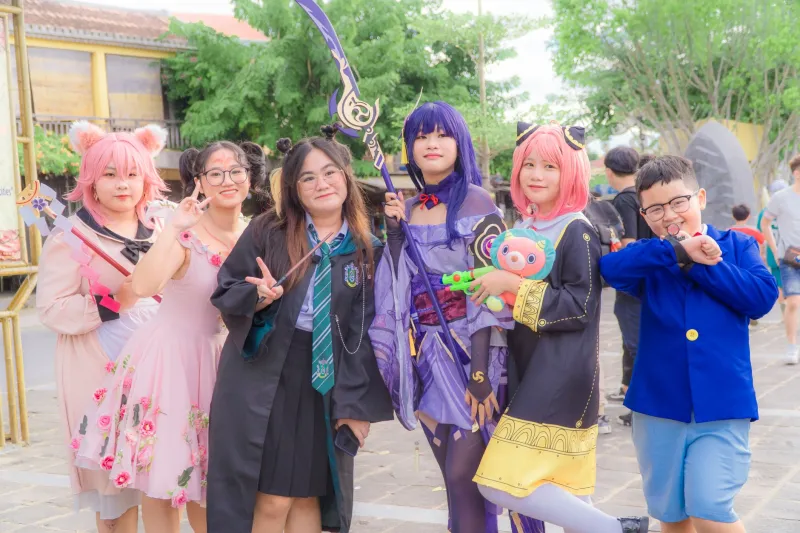
Take the phenomenon of watch parties, which exploded during the pandemic and never really went away. Groups of strangers gathering online — or now in-person again — to watch reality competition shows, sports playoffs, or award shows together. The shared commentary, the collective gasps, the group chat going absolutely feral when something unexpected happens. These aren't passive viewing experiences. They're communal rituals.
In Chicago, a neighborhood community center started hosting monthly "big screen nights" where residents could watch major entertainment events together — Oscars, music award shows, big sports moments. What started as a programming experiment became one of their most attended recurring events, drawing people across age groups and backgrounds who had lived on the same block for years without ever really connecting.
"Entertainment gave them an excuse to be in the same room," said the center's programming director, Lena Cho. "Once they were in the same room, the community started building itself."
The Concert Effect
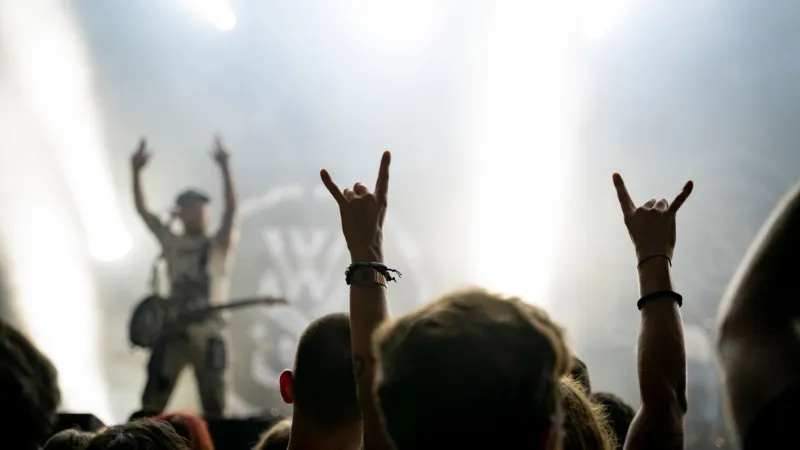
Live music deserves its own conversation here, because there is genuinely something different about being in a crowd of thousands of people all experiencing the same sound at the same moment. Neuroscientists have studied this — synchronized heartbeats, elevated oxytocin, the specific kind of joy that comes from moving in rhythm with strangers. Concerts aren't just entertainment. They're a kind of biochemical community-building.
The post-pandemic concert boom wasn't just about pent-up demand for live music. It was about pent-up demand for that specific feeling of being physically present with other humans in a moment of shared emotion. Artists noticed. Venues noticed. The cultural conversation around live music shifted from "is the industry dying" to "why does this feel more necessary than ever."
And notably, live music has a track record of crossing lines that other entertainment forms sometimes can't. Country fans and hip-hop fans in the same festival crowd. Multi-generational audiences at legacy artist tours. Communities that wouldn't overlap anywhere else, overlapping here, in the dark, because they love the same song.
What This Means for How We Build Community
Here at Laal2, the idea that culture and community are inseparable isn't just a tagline — it's something we see play out every day in the conversations happening across our platform. People don't just want content. They want to experience it with someone. They want to react, debate, celebrate, and process together.
The good news is that the appetite for collective experience hasn't gone anywhere. If anything, the more isolated our daily digital lives become, the more powerful these shared moments feel when they happen. The algorithm can curate your feed, but it can't manufacture the feeling of being in a stadium crowd, or a Discord voice channel at 2 a.m. when everyone's watching the same thing and someone says exactly what you were thinking.
America is complicated, divided, and loud. But it still gets chills at the same moments. And maybe that's enough to start with.