Your Algorithm Has Never Met Mine: Inside the Invisible Micro-Cultures Dividing (and Connecting) Us
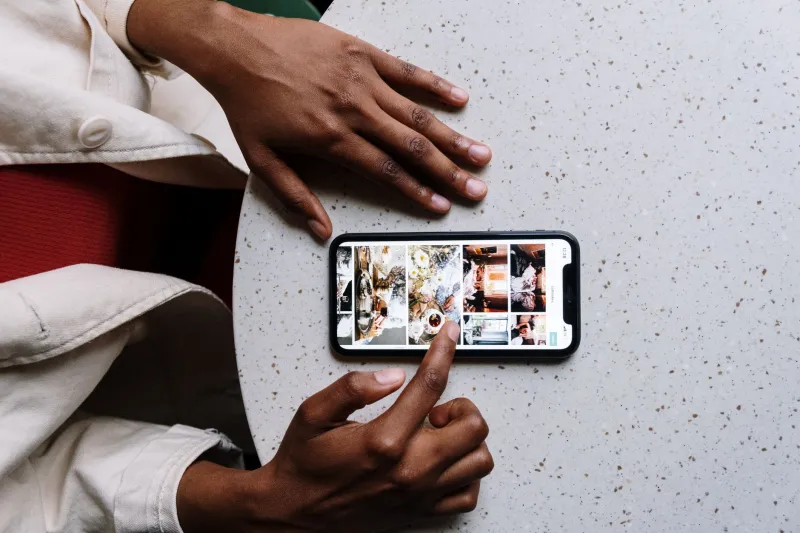
Ask two Americans what's trending on TikTok right now and you might as well be asking what the weather is like on different planets. One person's feed is deep in competitive axe-throwing tutorial content. Another is fully immersed in a thriving community of people who restore and collect Soviet-era kitchen appliances. A third has somehow landed in a niche of acoustic folk covers of early 2000s pop-punk songs, and they are not leaving.
None of these people have met. None of them need to. And that's exactly the point — and exactly the problem.
The Feed That Built a World
When TikTok's For You Page launched as the platform's primary discovery mechanism, it represented something genuinely new in social media architecture. Previous platforms — Facebook, Twitter, even early Instagram — were built around connections. You followed people you knew, or people you chose. Your feed reflected a version of your social world.
TikTok's algorithm doesn't care about your social world. It cares about your behavior. Every pause, every replay, every share and skip is a data point that tunes your feed with increasing precision toward content that holds your attention. The result is something that feels less like a social network and more like a personalized entertainment universe — one that grows more specific and more tailored the longer you spend inside it.
Digital culture researcher Dr. Jessie Daniels, who studies how online identity forms around algorithmic systems, describes this as "identity by curation." "The algorithm isn't just reflecting your interests back at you," she explains. "It's actively constructing a version of you — and then building a community around that construction."
That community can feel extraordinarily real. Because in many ways, it is.
The Cottagecore Economists and the Tag Champions
Let's talk specifics, because the specificity is kind of the whole point.
Somewhere in the American Midwest, there's a 24-year-old who has found their absolute people in a TikTok micro-community built around the intersection of cottagecore aesthetics and personal finance. These are people who make sourdough and track their index fund allocations in hand-lettered journals. They have a vocabulary, inside jokes, shared references, and a collective identity that is as coherent and meaningful as any neighborhood or religious congregation.
Somewhere else, there's a community of adults who are deeply, seriously invested in competitive tag — the schoolyard game, elevated to something approaching sport. They train. They film their matches. They debate strategy. They have heroes and rivalries. Their corner of TikTok has thousands of devoted regulars who would recognize each other instantly.
And then there are the obscure anime fandoms — not Naruto, not Attack on Titan, but the kind of hyper-specific subgenres that even dedicated anime fans might not know exist. Iyashikei. Josei slice-of-life. 1980s mecha with philosophical undertones. Each with its own passionate, fluent community that speaks a language outsiders simply don't have access to.
These communities are real. The connections people make inside them are genuine. The sense of belonging they provide is not manufactured or fake. By almost any social measure, they work.
The Isolation Hidden Inside the Belonging
Here's where it gets complicated.
When your community is that specific — when your people are the cottagecore finance crowd or the competitive tag devotees — the sense of belonging comes with a kind of invisible wall around it. The very precision that makes the community feel like home also makes it legible to almost nobody outside it.
This creates a strange double-consciousness that a lot of heavy TikTok users describe. Inside your niche, you feel seen, understood, maybe even celebrated. Step outside — into a family dinner, a workplace conversation, a first date — and your entire cultural reference frame becomes untranslatable. You're fluent in a language nobody around you speaks.
"There's a real psychological cost to having your richest social experiences happen in spaces that are invisible to the people physically around you," says Dr. Sherry Turkle, MIT professor and author of Alone Together. "It can deepen the sense that you don't quite fit anywhere in the offline world, even as you feel deeply connected online."
That tension — deeply connected and quietly isolated, simultaneously — is one of the defining emotional experiences of algorithmic culture.
What Happens to Shared Culture?
For most of American history, cultural touchstones were broad. MASH* finale. The moon landing. The Seinfeld finale. Michael Jordan's last championship. These were things that enormous numbers of people experienced together, roughly simultaneously, creating genuine shared reference points that crossed demographic lines.
The streaming era began fragmenting that. The algorithm era is accelerating it dramatically. When everyone's entertainment is precision-targeted to their specific interests, the odds of two strangers having a meaningful cultural overlap drops significantly. We're not just in different rooms — we're in different buildings, different cities, different realities.
Cultural critics have been sounding this alarm for a while, and it's worth taking seriously. Shared culture isn't just entertainment trivia. It's social infrastructure. It gives strangers a starting point, communities a common language, and a society a sense of continuity across difference.
When that shared layer thins out, something real is lost.
But Also: Something Real Is Gained
Here's the counterargument, and it deserves space.
For a lot of people — especially those who grew up feeling like their interests were too weird, too niche, too specific to ever find a community around — algorithmic micro-cultures have been transformative. The kid in rural Ohio who's obsessed with traditional Japanese woodworking techniques can now find thousands of people who share that passion. The Black woman in a predominantly white suburb who's deep into Afrofuturist literature has a thriving online community that reflects her back to herself.
Before TikTok's algorithm, those people often had no community at all. The choice wasn't between micro-culture and broad shared culture — it was between micro-culture and loneliness.
So when we talk about fragmentation as a loss, we need to be honest about what was there before. For a lot of Americans, "shared culture" often meant dominant culture — the tastes, references, and aesthetics of the mainstream, which frequently excluded them entirely.
Can the Fragments Find Each Other?
The most interesting question isn't whether algorithmic fragmentation is good or bad. It's whether the micro-cultures it creates can occasionally, meaningfully intersect.
Sometimes they do. A meme that starts in one niche migrates to another. A creator who built their audience in the competitive tag community collaborates with someone from the cottagecore world. A piece of obscure anime content breaks through to the general feed and suddenly everyone's talking about it. These moments of cross-pollination are rare, but they're electric when they happen — brief windows where the invisible walls come down and people realize their very different corners of the internet actually have something to say to each other.
That, maybe, is what community-building looks like in 2024. Not a town square where everyone gathers. More like a city with a thousand neighborhoods that occasionally, improbably, find reasons to visit each other.
Laal2 exists in that space — where the weird and the specific and the deeply personal become points of connection rather than isolation. Because the truth is, your niche is someone else's home. You just haven't met them yet.