Clicking Unfollow Shouldn't Feel Like a Breakup — But It Does

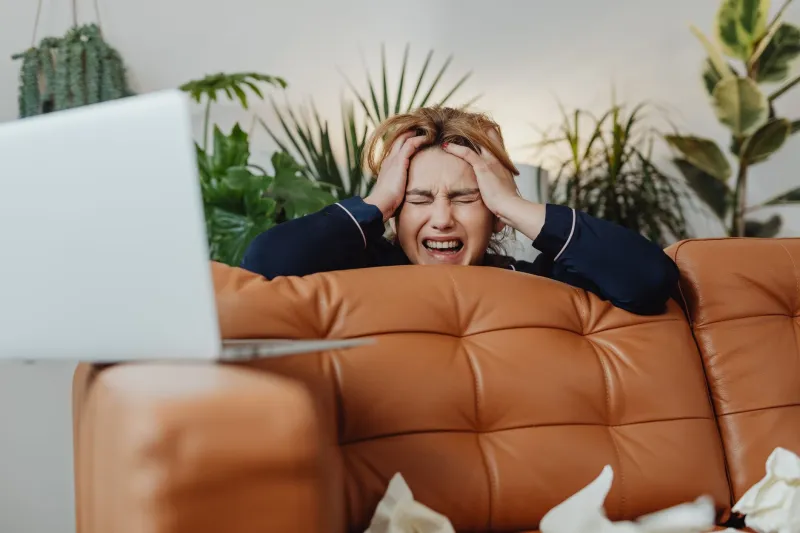
It starts with a video you don't finish. Then another. Then you notice you've been skipping their uploads for three weeks straight, letting them pile up in your feed like unread texts from someone you're not sure you still like. And then one afternoon, for no dramatic reason at all, you hover over that button — unfollow — and something in your chest does a thing.
A thing it really shouldn't do for a person who has never once learned your name.
But here we are.
The Relationship That Was Never Supposed to Be One
We've talked a lot, culturally, about parasocial relationships — the one-sided emotional bonds people form with creators, celebrities, and characters who don't know they exist. What gets discussed less is the exit. The quiet, weird, guilt-soaked experience of deciding that a person you've followed for years just doesn't fit your life anymore.
Because that's what it feels like: a life decision. Not a content preference.
Psychologists who study digital attachment point out that the brain doesn't fully distinguish between real relationships and sustained parasocial ones when it comes to emotional processing. You've spent hundreds — maybe thousands — of hours with this person. You know their dog's name, their childhood trauma, their coffee order, their on-again-off-again situationship. You've watched them cry. You cried with them. That kind of accumulated intimacy doesn't just evaporate because the connection was technically one-directional.
So when you walk away, your nervous system treats it like a real loss. Because in a very specific and underappreciated way, it is.
What Actually Triggers the Digital Divorce
People rarely unfollow in a single dramatic moment. It's usually erosion. A slow drift between who a creator used to be and who they've become — or more accurately, between who you used to be and who you've become.
Sometimes it's a values thing. A creator you followed for cooking content starts posting takes you find uncomfortable. A comedian whose humor once felt sharp starts landing differently after a few years of real-world experience on your end. A mental health influencer begins to feel performative in ways they didn't before. You haven't necessarily changed your mind about them as a person — but the fit is gone.
Other times, it's simpler. You grew up. You moved on. The YouTuber who got you through your mid-twenties apartment-and-anxiety era is still making the same content, and it's still good, but it's no longer for you. That's not a betrayal. That's just time doing what time does.
And then there are the harder cases — the ones where something happened. A controversy, a callout, a clip that circulated and made you look at five years of content differently. Those unfollows carry a different kind of weight. Less like a breakup, more like finding out something about an old friend that recontextualizes everything.
The Guilt Is the Strangest Part
Ask anyone who's gone through a significant unfollow — the kind where you'd been with a creator since the early days, through the rebrandings and the breakdowns and the sponsored segments — and most of them will tell you the same thing: they felt guilty.
Which is objectively strange! You're not obligated to anyone's subscriber count. The creator in question will never know you left. You owe them nothing beyond basic human decency in the comments, which, honestly, most people manage fine.
But the guilt persists anyway. Some of it is about identity — this creator was part of how you understood yourself for a stretch of your life. Leaving them feels like abandoning a version of you. Some of it is about community — their comment section was your comment section, and you're ghosting that whole ecosystem too.
And some of it, if we're being honest, is about the creator themselves. Especially if you like them as a person. Especially if you've heard them talk, in videos or in podcasts, about how much the audience means to them, how they notice when numbers dip, how it's personal even when it shouldn't be. You've absorbed enough of their inner world to feel like your departure might somehow register as a small wound. It won't. It doesn't. But the feeling is there.
How People Actually Navigate It
The unfollow isn't the only option, and a lot of people don't go straight there. There's the mute, the notification-off, the passive non-engagement where you technically still follow but have essentially left the building. These feel like the emotional equivalent of staying friends on Facebook with someone you never talk to anymore — technically present, functionally gone.
Some people do the slow fade deliberately. They don't want the finality of the unfollow, so they let the algorithm do the work, letting a creator drift further and further down the feed until they've effectively disappeared without anyone having to make a decision.
Others rip the bandage. One click, done, move on. These tend to be people who've made peace with the idea that their media consumption is allowed to evolve without ceremony.
And then there are the people who write about it — in Reddit threads, in Discord servers, in comment sections of other creators they've moved on to. I used to love them but I think I've outgrown them. Is that okay? The responses are always warm. Because almost everyone has been there.
Outgrowing Someone Isn't a Betrayal
Here's the thing about parasocial relationships that we don't say enough: the healthy ones have a natural arc. You find a creator when you need them. They give you something — entertainment, community, perspective, comfort. You carry that with you. And at some point, you might not need it in the same way anymore.
That's not a failure of the relationship. That's the relationship doing exactly what it was supposed to do.
The creators who built real, lasting things know this. The best ones, the ones who've been around long enough to watch their audiences age alongside them, will tell you that their job was never to keep you forever. It was to be useful, or joyful, or meaningful, for whatever stretch of time they had with you.
So if you've been hovering over that unfollow button feeling like you owe someone an explanation — you don't. Not to them, and honestly, not to yourself either.
Click it or don't. Either way, what you felt was real. And that counts for something, even when it ends.