Halfway and Done: The Rise of the Intentional Drop and What It Says About Us

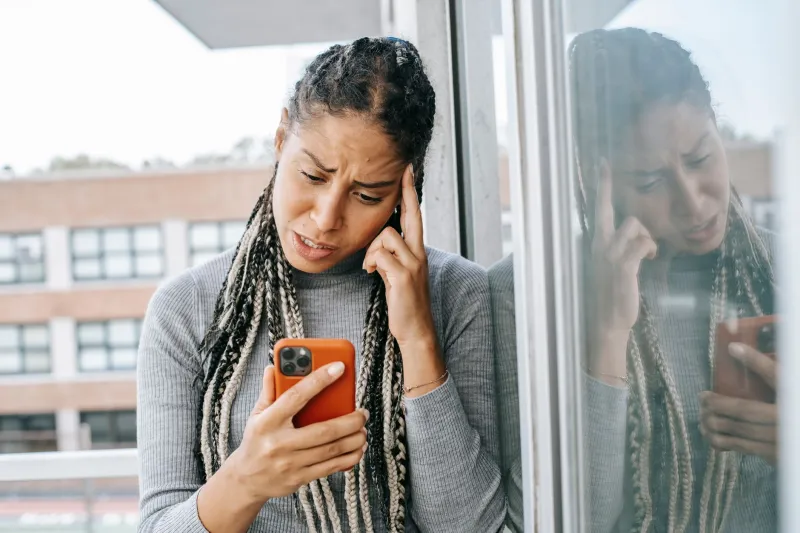
Somewhere around episode five of a show you were genuinely excited about, something happened. Maybe the pacing dragged. Maybe a character made a choice so baffling it snapped you out of the spell. Maybe you just... opened your phone and never really came back. You told yourself you'd finish it later. You didn't. You still haven't. And honestly? You're not sure you care anymore.
Welcome to the Great Unwatch — a quiet but massive cultural shift where viewers aren't waiting for a bad finale to bail. They're leaving mid-story, mid-season, sometimes mid-episode, and they're doing it without apology.
It's Not You, It's the Queue
Streaming gave us everything we ever asked for: instant access, no commercials, entire seasons dropped at once. And somehow, that abundance broke something. When there's always another show waiting — and the algorithm is already whispering suggestions before the credits roll — the emotional cost of sticking with something that's lost its spark feels a lot higher than it used to.
Dr. Pamela Rutledge, a media psychologist who's spent years studying how audiences form attachments to narratives, puts it plainly: "The commitment structure of television has completely changed. We used to invest in shows because we had no choice — you waited a week, you showed up. Now the psychological contract between viewer and content is entirely on the viewer's terms."
And viewers, it turns out, are exercising those terms aggressively.
A 2023 survey by Whip Media found that nearly 60% of U.S. streaming subscribers had abandoned at least one show mid-season in the past year. That's not people giving up on bad shows. That's people giving up on shows they were, at one point, genuinely into.
The Anxiety of an Unfinished Story
Here's the weird part: abandoning a show doesn't always feel like relief. For a lot of people, it creates its own low-grade anxiety — a nagging awareness that there's something unresolved sitting in their watchlist like an unanswered text.
This phenomenon has a name in psychology circles: the Zeigarnik Effect. It's the brain's tendency to fixate on incomplete tasks more than finished ones. Applied to television, it means that half-watched show isn't just gone from your life. It's occupying a small but persistent amount of mental real estate.
"People will describe feeling guilty about not finishing something, almost like they let a friend down," says Dr. Rutledge. "That's how deep the parasocial connection to a narrative can run. The characters feel real. Leaving them mid-story feels like abandonment."
So why do it anyway? Because finishing feels worse.
For many viewers, especially those who've been burned by disappointing final seasons — Game of Thrones still lives rent-free in a lot of heads — committing to an unfinished series feels like an emotional risk. Better to step off the ride early than to invest twenty more hours only to feel cheated at the end.
Creative Burnout Is Real, and Audiences Feel It
There's also a legitimate craft conversation happening here. Many critics and viewers alike have noticed that the streaming era's demand for content volume has created a specific kind of narrative bloat. Shows get renewed before they've earned it. Seasons stretch to ten or twelve episodes when the story had maybe six episodes worth of momentum. Subplots multiply. Pacing suffers.
When a show that started tight and propulsive suddenly feels like it's stalling, audiences notice. And unlike the network TV era — where you'd grumble through a slow patch and come back next week out of habit — streaming removes that habitual return. Every episode is a fresh choice. Every slow stretch is an invitation to leave.
"The binge model actually works against sustained engagement for a lot of people," says media analyst and TV critic Katrina Monroe, who writes about streaming trends for several entertainment outlets. "When you're watching week to week, a slow episode is a minor inconvenience. When you're bingeing and you hit three slow episodes in a row, you're suddenly questioning the entire relationship."
What Quitting Actually Signals
It would be easy to read the Great Unwatch as a symptom of shorter attention spans or a generation that can't commit. But that framing misses something important. In many cases, rage-quitting a show mid-season is an act of self-awareness — people recognizing that their time and emotional energy have value and choosing not to spend them on something that isn't delivering.
That's not impatience. That's discernment.
There's also a community angle that doesn't get talked about enough. A huge part of why people stick with shows is the social experience — the group chat blowing up, the Reddit threads, the workplace water cooler recaps. When a show loses its cultural moment, when the conversation around it dies down, the incentive to keep watching diminishes fast. You're not just watching a show. You're participating in something. And when that participation fades, the show itself can feel hollow.
The Shows That Keep People Hooked (And What They're Doing Right)
Not every show is bleeding viewers. Some series — The Bear, Shogun, Abbott Elementary — have maintained fierce loyalty precisely because they respect the audience's time. Episodes are purposeful. Character arcs feel earned. The pacing doesn't assume you have nowhere else to be.
What these shows share isn't just good writing (though that helps). They share a kind of narrative honesty — a sense that the people making the show are as invested in it as the people watching it. Audiences can feel the difference between a show that has something to say and one that's filling a content slot.
"Viewers have gotten very sophisticated," Monroe says. "They can smell a show that's been stretched to hit an episode count. And once they smell it, they're out."
So What Happens Next?
The Great Unwatch isn't going away. If anything, as the streaming market tightens and platforms push for longer seasons to justify subscription prices, the tension between viewer patience and content volume is only going to grow.
What might change is how we talk about it. Dropping a show used to carry a faint social stigma — like admitting you couldn't finish a book. Increasingly, it's becoming a point of pride. A sign that you know what you like and you're not willing to waste a Tuesday night on something that stopped earning your attention three episodes ago.
And honestly? There's something kind of healthy about that. In a culture that constantly asks us to stay engaged, stay outraged, stay plugged in — choosing to walk away from something that isn't working for you anymore is its own small act of autonomy.
The show will still be there if you change your mind. Probably. Unless it gets canceled first.