Rawness for Sale: The Strange Business of Performing Realness Online
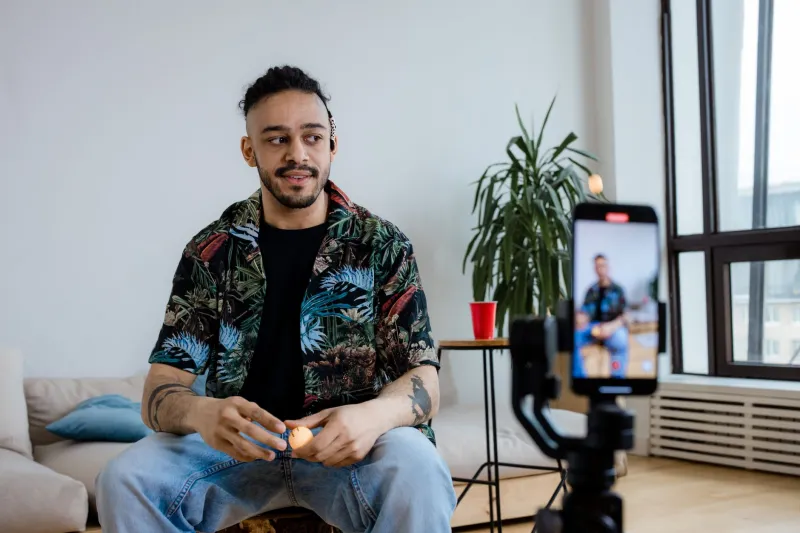
There's a specific kind of video that dominates your feed right now. No makeup. Slightly shaky camera. A creator sitting in their car, or on the bathroom floor, or in bed with the lights low. They're about to tell you something real. Something they've never shared before. And somehow, it's perfectly framed.
Welcome to the authenticity era — where being unfiltered is the filter.
The Pivot to 'Real'
It didn't happen overnight. For years, the dominant aesthetic of social media was aspirational: perfect skin, curated kitchens, beach vacations that looked like magazine spreads. Then audiences started burning out on the fantasy. Engagement dipped. Comments got cynical. People started saying they wanted less perfection and more honesty.
Creators listened. Or rather, they adapted.
By the early 2020s, the "raw and real" format had become its own polished genre. Crying on camera. Sharing mental health struggles. Posting the "ugly" photo alongside the good one. Announcing burnout. Going "off grid" for a week and filming the whole thing. The content changed shape, but the machinery behind it — the scheduling, the strategy, the monetization — stayed exactly the same.
That tension is what makes this moment so fascinating and, honestly, a little uncomfortable to sit with.
When Vulnerability Becomes a Content Pillar
Ask any mid-to-large creator what performs best right now, and most will tell you the same thing: personal stuff. The messy stuff. The stuff that makes people feel like they're seeing behind the curtain.
Jessica, a lifestyle creator based in Austin with around 400,000 followers across platforms, puts it plainly: "My most-viewed video ever is me crying about a friendship that ended. It got three times the engagement of anything else I'd posted that year. I'm not saying I faked it — I was genuinely upset — but I also knew, on some level, that it would do numbers. And that's a weird thing to carry."
That's the paradox at the center of this whole conversation. The emotion can be completely real. The story can be true. And the decision to share it can still be strategic. Those things aren't mutually exclusive, but they create a kind of ethical gray area that neither creators nor audiences have fully figured out how to navigate.
Dr. Marcus Webb, a media psychologist who studies parasocial relationships and digital behavior, describes it as "performed sincerity" — not fake, but not entirely spontaneous either. "What we're seeing is a learned behavior," he explains. "Creators discover that a certain kind of openness generates connection and revenue. So they return to that well, often unconsciously shaping their disclosures to fit what the audience has rewarded before."
The Audience's Role in All of This
Here's the part we don't talk about enough: we built this.
Every time a viewer rewards a tearful confession with comments like "this is why I love you" or "finally someone being honest," they're training the algorithm — and the creator — to produce more of it. We say we want authenticity, but what we're actually responding to is the feeling of authenticity, which is a different thing entirely.
This isn't a criticism. It's just how human psychology works. We're wired to respond to vulnerability. It signals trust. It creates closeness. The problem is that when vulnerability becomes content, it starts operating by content's rules: consistency, scalability, engagement optimization.
At some point, the audience becomes complicit in the performance they claim to be tired of.
Can You Actually Be Real on a Platform Designed for Consumption?
This is the question that keeps coming up, and nobody has a clean answer.
Some creators argue that the platform doesn't negate the realness of what they share. "Just because I know it might get views doesn't mean what I'm saying isn't true," says Darius, a mental health advocate and creator based in Atlanta. "Therapists get paid to listen. Journalists get paid to tell stories. I get paid to share mine. The transaction doesn't make the content fake."
That's a fair point. But there's a difference between sharing something true and engineering the conditions for maximum emotional impact — the lighting, the pacing, the strategic pause before the revelation. At some point, the craft of content creation starts working against the spontaneity that audiences are supposedly craving.
Dr. Webb draws an analogy to reality television. "We've known for decades that reality TV is heavily produced, and yet people still feel genuine emotional connections to the people on screen. The 'realness' is relative. What audiences are actually responding to is relatable human experience, regardless of how constructed the container is."
Maybe that's the more honest framing. Not "is this authentic?" but "does this resonate?" And if it resonates, does the construction behind it actually matter?
The Burnout Behind the Breakthrough
There's a darker side to all of this that doesn't get enough airtime. When vulnerability is a content strategy, creators can find themselves in a bind: their audience expects access to their emotional life, and pulling back feels like a betrayal — or worse, a drop in engagement.
Jessica describes a period where she felt pressure to keep producing emotional content even when she didn't have anything to share. "You start almost looking for drama in your own life because that's what works. And then you wonder if you're manufacturing your own suffering for content. That's a really bad place to be."
This is where the performance of authenticity stops being just a cultural curiosity and starts being a real mental health conversation. The expectation of constant openness — the parasocial contract that says "I gave you access, so keep giving me more" — can be genuinely harmful for the people doing the sharing.
So Where Does That Leave Us?
Probably in the same messy, unresolved place we've always been when it comes to media and performance. Humans have always crafted the stories they tell about themselves. We do it in job interviews, on first dates, at family dinners. Social media didn't invent self-presentation — it just gave it a platform, an audience, and a revenue model.
What's new is the scale, and the expectation. When millions of people feel like they have a personal relationship with a creator, the stakes of that performance get higher. The intimacy feels real even when the context is commercial. And that collision — between genuine human connection and the economics of content — is something we're all still figuring out.
Maybe the most honest thing any creator can say right now is exactly what Jessica said: I don't always know where the real ends and the content begins. That uncertainty, at least, feels completely unscripted.