Rooting for the Crash: Why Watching Things Fail Has Become Our Favorite Hobby
Let's be real for a second. You've done it. You sat through an entire episode of something you actively hated — maybe two seasons of it — and you kept going back. Not because it got better. Not because you were holding out hope. You went back because watching it fall apart, week after week, had become the whole point.
Welcome to the Hate-Watch Olympics. Population: basically everyone with a streaming subscription and a group chat.
From Guilty Pleasure to Competitive Sport
Hate-watching used to be something people whispered about. You'd catch yourself thirty minutes into a notoriously bad reality show and feel vaguely embarrassed, like you'd been caught eating cereal at midnight. It was private, a little shameful, and definitely not something you'd lead with at a dinner party.
Then social media happened. And suddenly, suffering through bad television together became one of the most communal experiences the internet had to offer.
Think about the moment Velma dropped on Max and the entire internet collectively lost its mind. Or the annual tradition of dissecting whichever Bachelor franchise season has gone off the rails hardest. Or the way people binged Rings of Power not to celebrate it but to generate content about its most questionable choices. The hate wasn't incidental — it was the entertainment.
We're not just watching things we dislike anymore. We're performing our dislike, curating it, and sharing it like a highlight reel.
The Psychology Behind the Dumpster Fire
There's actually something deeply human going on here, and it's worth unpacking instead of just dunking on it.
For starters, shared negativity is a surprisingly powerful social glue. Research in social psychology has long suggested that bonding over a common enemy — even a fictional one, even a bad TV show — creates real feelings of connection. When you and your coworkers spend Monday morning rehashing every terrible decision a reality TV contestant made over the weekend, you're not just venting. You're building something.
There's also the element of superiority, which nobody really wants to admit but everyone kind of feels. Watching something fail when you knew it was going to fail is satisfying in a way that watching something succeed just isn't. You called it. Your taste was vindicated. The narrative confirmed what you already believed. That's a dopamine hit, and the algorithm knows it.
And then there's the spectacle itself. A truly spectacular failure — a big-budget movie that somehow misses every mark, a celebrity-hosted show that collapses in real time, a franchise reboot that manages to insult its own fan base — has a kind of gravitational pull that competent, forgettable content just can't match. Mediocrity disappears. Disaster becomes legend.
The Performers and the Audience
Here's where it gets interesting: hate-watching has developed its own ecosystem of creators who've figured out how to monetize the whole thing.
YouTube is full of channels built almost entirely around dissecting bad movies, tearing apart poorly written plots, and cataloging the specific failures of prestige television that didn't quite stick the landing. Some of these creators have millions of subscribers. They're not film critics in any traditional sense — they're more like comedic archaeologists, sifting through the rubble of a failed project and holding up pieces for the crowd to laugh at together.
TikTok has its own version of this, where a three-minute breakdown of a show's worst scene can rack up more views than any promotional clip the network put out. The mockery becomes the marketing. Sometimes the hate-watch crowd is the only reason a show stays in the cultural conversation at all.
There's a strange irony in that. The thing you're watching specifically because you think it's terrible is, in some measurable way, more alive than the thing you mildly enjoyed and forgot about by Thursday.
When the Line Gets Blurry
Of course, not all hate-watching is created equal, and it's worth being honest about where it gets complicated.
Some of it is genuinely fun and harmless — a group of friends hate-watching a notoriously cheesy action sequel over pizza isn't hurting anyone. But there's a version of this that starts to feel less like entertainment and more like a pile-on. When the target shifts from a faceless studio product to an individual creator, a reality TV participant who didn't sign up for national ridicule, or a show made by a marginalized team that got unfairly dogpiled — the sport starts to curdle.
The audience rarely distinguishes between those cases in the moment. The dopamine of the dunk doesn't ask too many questions about who's on the receiving end.
There's also the question of what it does to your own taste over time. If you spend more hours watching things you hate than things you love, and if your most engaged, most social media-active entertainment experiences are all rooted in contempt — does that start to rewire what you actually enjoy? Does the crash become the only thing that feels exciting anymore?
Some people who've been deep in hate-watch culture for years will quietly admit: finding something they genuinely love has started to feel harder. The bar for sincere enthusiasm has gotten weirdly high.
The Weird Respect in Showing Up
Here's the thing, though. There's something almost honest about hate-watching that gets undersold.
When you hate-watch something, you're actually paying attention. You're engaged, you're critical, you're forming opinions and articulating them. That's more than can be said for half the content people passively scroll past and immediately forget. The hate-watcher is, in a strange way, more present than the casual viewer who never quite registers what they watched.
And sometimes — not always, but sometimes — the hate-watch pivots. You start watching something to mock it and somewhere around episode four, you realize you've gotten genuinely invested. The characters started to matter. The show found a gear you didn't expect. You're still not sure if it's good, exactly, but you care about it now, and caring is basically the whole game.
The hate brought you in. Something else made you stay.
So, Is This Fine?
Probably? Mostly? With some asterisks?
Hate-watching, at its best, is a form of cultural engagement. It's criticism with a sense of humor. It's community built around shared taste — even if that shared taste is, technically, a shared distaste. It's people finding each other across the vast, fragmented internet over the specific experience of watching the same trainwreck at the same time.
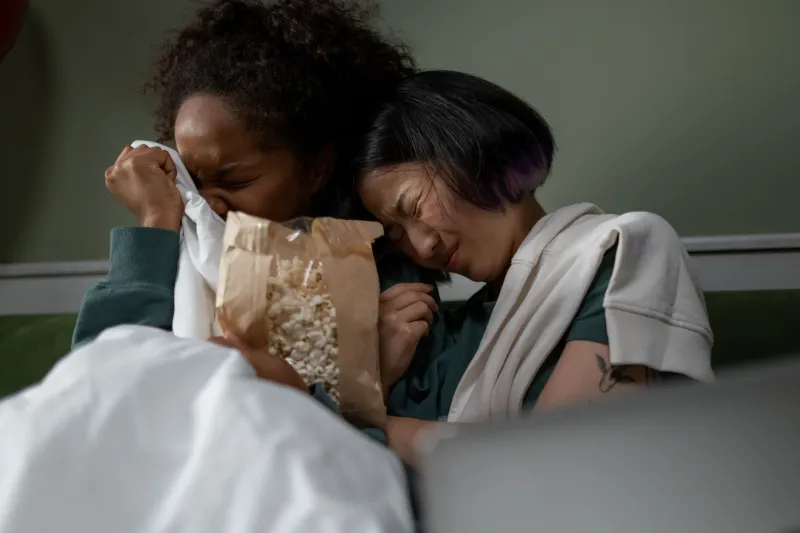
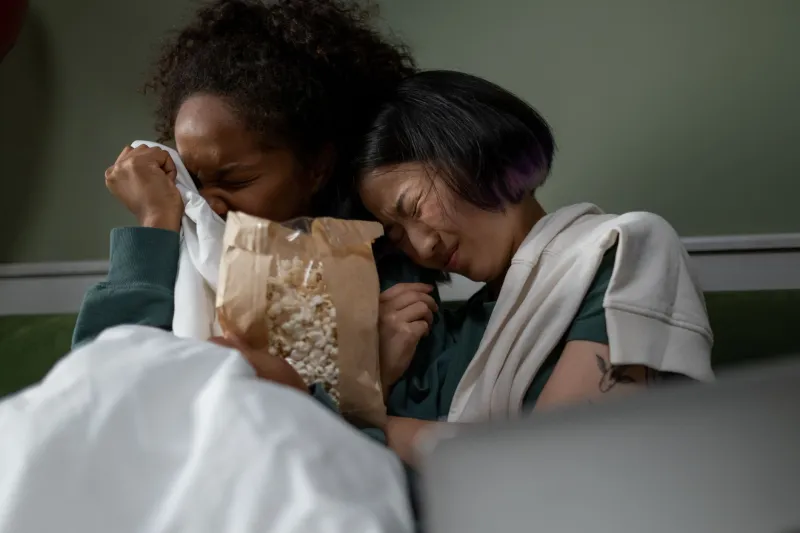
At Laal2, we're not here to tell you what to watch or how to feel about it. If your Friday night plans involve a bag of chips, a group chat, and a movie everyone agrees is objectively a disaster — that's a valid Friday night. The laugh is real. The connection is real. The two hours of roasting a bloated franchise reboot together is, genuinely, a shared cultural experience.
Just maybe, every once in a while, leave a little room for something you might actually love.
The crash is fun to watch. But sometimes the landing is better.