You Won't Always Love This: The Surprisingly Beautiful Cycle of Who You Are as a Fan

There's a very specific kind of discomfort that hits when you're scrolling through old photos and you spot the T-shirt. The band name across your chest. The one you used to rep like it was a belief system, not a merch purchase. And instead of warmth, you feel something closer to mild embarrassment. Not shame, exactly. Just distance. Like you're looking at someone you used to know really well but haven't talked to in years.
Here's the thing nobody really tells you when you're deep in a fandom: it's almost certainly temporary. And that's not a tragedy. That might actually be the whole point.
The Phases Are Real, and They're Predictable
Think back across your own timeline. Maybe you had a middle school era that was pure pop radio and Disney Channel loyalty. A high school phase where you suddenly discovered something that felt more real — indie rock, anime, a specific corner of YouTube that nobody else your age had found yet. College might have opened you up to entirely different sounds, aesthetics, and communities. And then adult life reshaped things again.
This isn't random. Developmental psychologists have long connected identity formation to the media and cultural communities we latch onto. During adolescence especially, the things we love become proxies for who we are — or who we're trying to become. A teenager isn't just listening to a band. They're using that band to signal belonging, difference, aspiration. The fandom is doing identity work on their behalf.
Which explains why it hits so hard. And why letting it go can feel like losing a piece of yourself, even when you're the one doing the leaving.
Why We Cringe at Our Old Selves
The cringe response is interesting. It's not really about the music or the show being bad. It's about recognizing how much weight you placed on something that now feels lightweight. You didn't just like that artist — you were the person who liked that artist. It was in your bio, your playlist names, your whole aesthetic. When the attachment fades, the intensity of it can read as embarrassing in hindsight.
But that intensity was also genuine. It served a real function. Communities built around shared entertainment fandoms — whether that's a K-pop group, a prestige drama, a gaming franchise, or a specific podcast universe — offer something that's genuinely hard to find elsewhere: instant belonging with a clear entry point. You know the references. You speak the language. You're in.
The cringe is just what happens when you've outgrown the language but still remember being fluent in it.
The Younger Generation Already Knows It Won't Last
Here's what's fascinating about Gen Z and Gen Alpha fans: a growing number of them are building meta-awareness directly into their fandom experience. They'll be deep in a stan community for an artist and openly joke about the fact that they'll probably look back on this era with a mix of fondness and mild horror. They're fans and they're watching themselves be fans simultaneously.
This self-awareness isn't cynicism. It's more like emotional preparation. They've grown up watching older millennials do the whole "I used to be OBSESSED with [thing] and now I can't even explain why" arc enough times that they're entering fandoms with a kind of built-in expiration awareness.
In some ways, that makes the experience more honest. You can be all-in right now without pretending it's forever. You can love something completely and still acknowledge that you're a different person every few years, and the next version of you might have completely different taste.
Community Belonging Gets Complicated
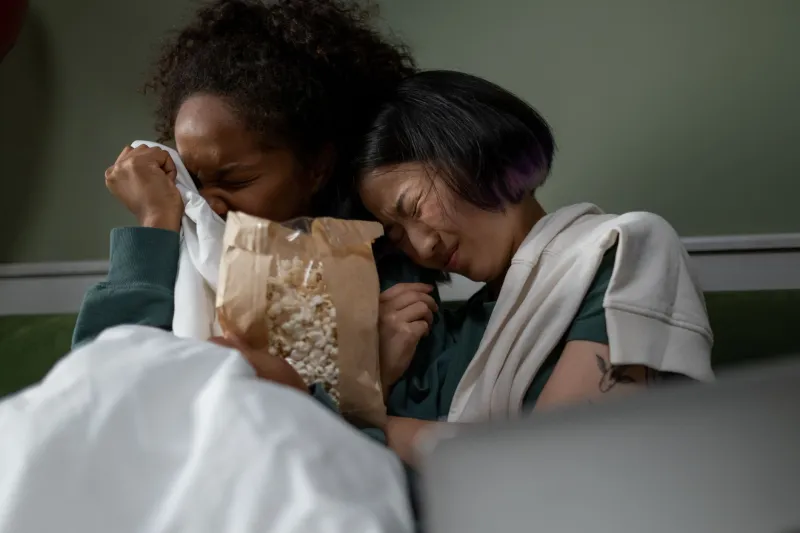
The part that doesn't get talked about enough is what happens to the community when you evolve out of a fandom. Because it's not just about the music or the show — it's about the group chat, the Discord server, the friends you made at the concert, the inside jokes that required a shared obsession to even make sense.
When your taste shifts, you don't just lose an interest. Sometimes you lose a social infrastructure that was built around it.
This is especially true for people who found community in niche fandoms during formative years. The kids who bonded over a very specific anime, or a cult TV show that got canceled too soon, or a band that never quite broke mainstream — those tight-knit communities can feel irreplaceable. And when you drift, it can feel like a quiet kind of social loss that doesn't have a name.
What makes it more complicated is that fandom communities often have long memories. If you were a vocal, active member and then you go quiet, people notice. Leaving a fandom isn't always as clean as just... stopping. There's a whole social negotiation involved.
The Good News: You Carry It With You Anyway
Here's what the cringe narrative misses. The things you loved, even the ones that now feel embarrassing, shaped the person doing the cringing. The band you wore on your chest taught you something about what music could feel like. The show you watched obsessively gave you a framework for storytelling, or humor, or what it meant to root for a character. The fandom community you were part of showed you what belonging felt like.
None of that disappears just because your taste evolved. It's layered into you.
Some people even come back around. The concept of the "nostalgia era" — where you revisit something from a previous phase of your life and find it genuinely holds up, or find a new appreciation for it — is a real and common experience. What felt embarrassing at 22 might feel charming at 32. Context changes everything.
Owning the Whole Timeline
Maybe the healthiest relationship with your own fandom history is one that doesn't require you to disown any of it. You don't have to pretend you were always this cool, this nuanced, this discerning. You were a teenager who screamed at a concert and meant every second of it. You were a college student who built their entire personality around a podcast for about eighteen months. You were whoever you were, and you loved what you loved.
The evolution isn't a correction. It's just the next chapter.
At Laal2, we talk a lot about the way entertainment builds community — how the things we watch, stream, and obsess over are never really just about the content itself. They're about who we are when we're consuming them, and who we become because of it. Your taste is always a moving target, and honestly? That's what makes it interesting.
So go ahead and love what you love right now with your whole chest. Just don't be surprised when the you of ten years from now looks back at this era with a soft, knowing smile. That's not loss. That's growth wearing a band T-shirt.